Jan Neal Law Firm, LLC

Alabama Estate, Elder and Special Needs Law


Leave a comment

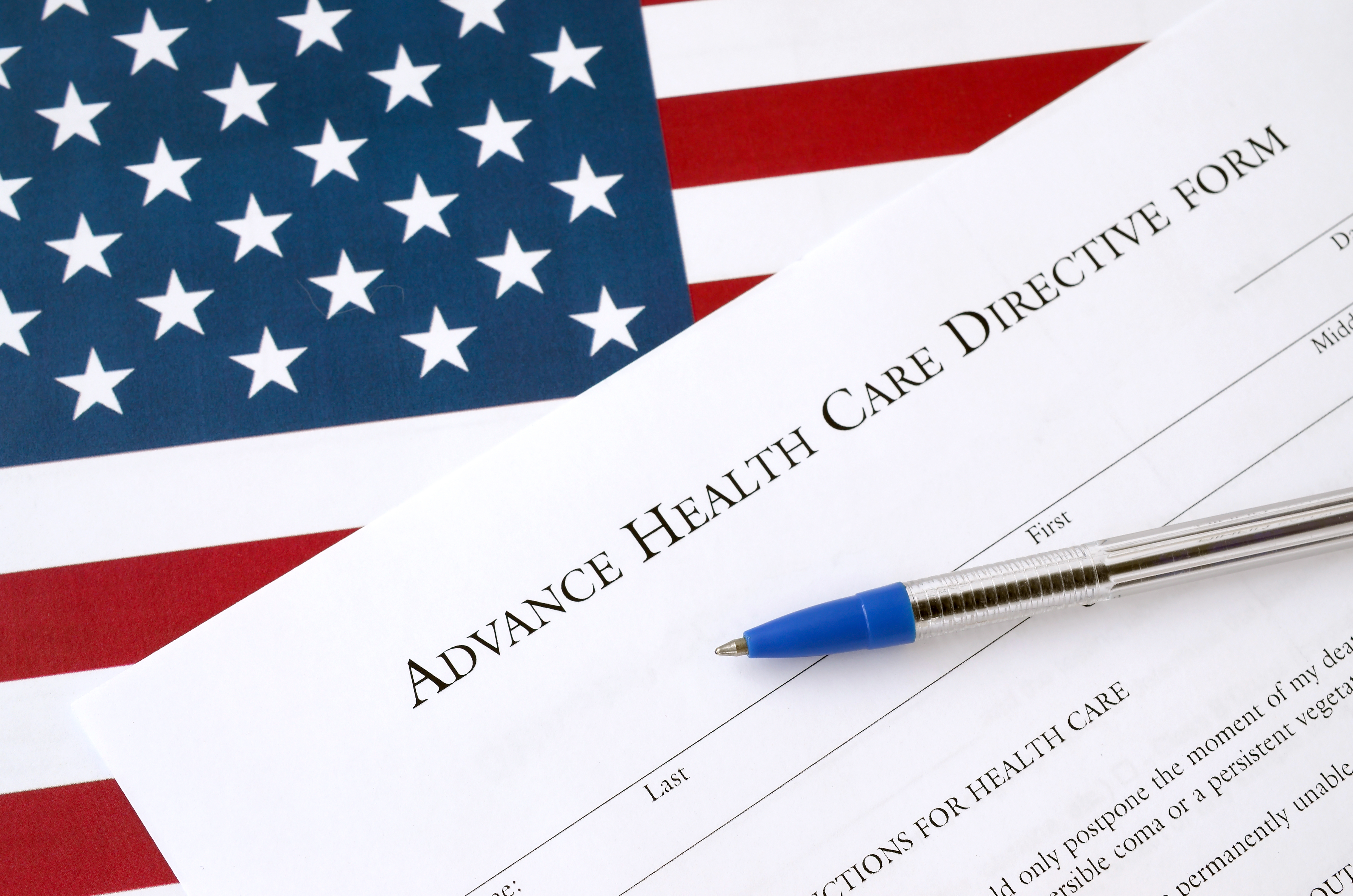
Is Your Out-of-State Health Care Directive Valid?

Making sure your end-of-life wishes are followed no matter where you happen to be is important. If you move to a different state or split your time between one or more states, you should make sure your advance directive is valid in all the states you frequent.

A medical advance directive gives instructions on the kind of medical care you would like to receive or who should speak for you if you become unable to express your wishes yourself. Each state has its own laws setting forth requirements for valid advance directives and health care proxies. For example, some states require two witnesses, other states require one witness, and some states do not require a witness at all.

Most states have provisions accepting an advance directive that was created in another state. But some states only accept advance directives from states that have similar requirements and other states do not say anything about out-of-state directives. States can also differ on what the terms in an advance directive mean. For example, some states may require specific authorization for certain life-sustaining procedures such as feeding tubes while other states may allow blanket authorization for all procedures.

To find out if your document will work in all the states where you live, consult with an attorney in the state. You may want to prepare documents for each state. 

As for Alabama, health care directives prepared in other states are valid if they comply with Alabama law or the law of the state where created.  Even if an out of state directive is honored, Alabama will not authorize the administration, withholding or withdrawal of health care if prohibited in Alabama.  For instance, in Alabama a health care directive permits the agent to make all decisions the person who made the document could make but does not include psychosurgery, sterilization, abortion when not necessary to preserve the life of the principal, or involuntary hospitalization. Further, the advance directive for healthcare of a patient who is known by the attending physician to be pregnant shall have no effect during the course of the patient’s pregnancy.

Even if you have a valid out of state directive, consider that research may be needed during an emergency to determine whether the out of state document is valid under the laws of the state where prepared since medical professionals will not know without further investigation.  This is why creating a document which complies with the law of each state may be the most straightforward solution. 


Leave a comment

Physician Order For Life Sustaining Treatment (POLST)

You can get a good deal of information from the internet, but it is not always accurate for your state.  An example is the Physician Order for Life Sustaining Treatment (POLST) for Alabama.  This is an advance directive agreement between a doctor and a patient with advanced, chronic, or end-stage illness stating the patient’s choices for treatment. A doctor signing the form turns those choices into physician orders to assure that the patient gets only the treatment he or she wants. It is known as a portable medical order.  

There are a number of states which recognize this national form first developed in 1991 in Oregon, but Alabama is not one of them.  The closest thing Alabama has is a portable DNAR (Do Not Attempt Resuscitation) which only instructs health care providers not to perform cardiopulmonary resuscitation (CPR) if a patient’s breathing stops or if the patient’s heart stops beating. 

According to the Alabama Department of Public Health, A POLST form from another state (or downloaded from the internet) cannot be a substitute for the Alabama Portable DNAR form published by Health Department. If a hospital or other health care entity wants to use its own DNAR rather than the Health Department form, it can, but it will not be portable from facility to facility.

If you want specific treatments honored in Alabama you need to either name an agent who knows your wishes to act for you as your health care proxy or prepare a detailed Advance Directive For Health Care, but no doctor will sign off on it.    


Leave a comment

Transfer on Death Deed (TODD) Not Valid in Alabama

You may have read a widely circulated post on Facebook that would make you think you should prepare a Transfer on Death Deed (TODD) to pass your property when you die without the need for probate.  And you can download and prepare such a document at various online locations.  See https://www.templateroller.com/template/2142576/transfer-on-death-deed-form-alabama.html. The only problem is Alabama does not have a TODD statute, so any such deed would have no validity.

As of January 14, 2022, twenty-nine states, along with the District of Columbia and the U.S. Virgin Islands, have some form of TODD.  Alabama is not one of them, and neither is Georgia or Florida.  Mississippi, bordering Alabama, does have a TODD statute, and, as of January 14, 2022, a TODD statute was pending in Tennessee.

There are other ways to pass property while avoiding probate, but be aware of the fact that the TODD is not available in Alabama. 


Leave a comment

How Gift Giving Can Affect Medicaid

If you will need Medicaid to pay for long-term care for you or your spouse in the next five years, you need to be careful with gift giving because giving away money or property can interfere with your eligibility. 

Under federal Medicaid law, if you transfer certain assets within five years before applying for Medicaid, you will be ineligible for a period of time (called a transfer penalty), depending on how much money you transferred. Even small transfers can affect eligibility. While federal law allows individuals to gift up to $16,000 a year (in 2022) without having to pay a gift tax, Medicaid law still treats that gift as a transfer.  In fact, for every $6600 you give away you will incur a one month period of ineligibility for Medicaid. A month of penalty means Medicaid will not pay for your care, no matter how destitute you are.    

Medicaid reviews all bank records for five years prior to application. Any transfer that you make, however innocent, will come under scrutiny. For example, Medicaid does not have an exception for gifts to charities. If you give money to a charity, it could affect your Medicaid eligibility down the road. Similarly, gifts for Christmas, weddings, birthdays, and graduations can all cause a transfer penalty, however reasonable gifts are usually allowed. If you buy something for a friend or relative, this could also result in a transfer penalty.  Also selling property for less than the tax assessor’s appraised value is considered an uncompensated transfer of the amount for which you sold the property for less than the tax value.  You will need documentation showing that you received fair market value in return for a transferred asset to avoid incurring a penalty. Repaying a debt not supported by a promissory note will also be considered a transfer subject to a penalty.

While most transfers are penalized, certain transfers are exempt from this penalty. Even after entering a nursing home, you may transfer any asset to the following individuals without having to wait out a period of Medicaid ineligibility:

  • your spouse
  • a trust for the sole benefit of your child who is blind or permanently disabled
  • a special needs trust for the benefit of the Medicaid applicant

In addition, special exceptions apply to the transfer of a home. The Medicaid applicant’s home may be transferred to the following individuals without incurring a transfer penalty:

  • A spouse
  • A child who is under age 21
  • A child who is blind or disabled (the house does not have to be in a trust)
  • A sibling who has lived in the home during the year preceding the applicant’s institutionalization and who already holds an equity interest in the home
  • A “caretaker child,” who is defined as a child of the applicant who lived in the house for at least two years prior to the applicant’s institutionalization and who during that period provided care that allowed the applicant to avoid a nursing home stay.